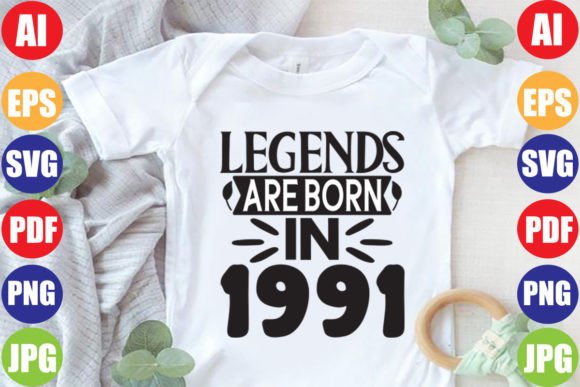
Legends Are Born in 1991
A Designer’s First Look: Bold, Nostalgic, and Built for Stitching
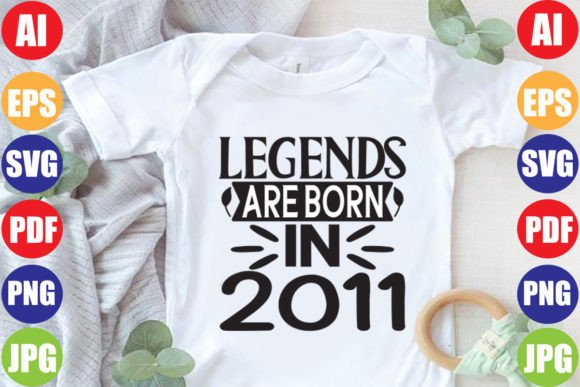
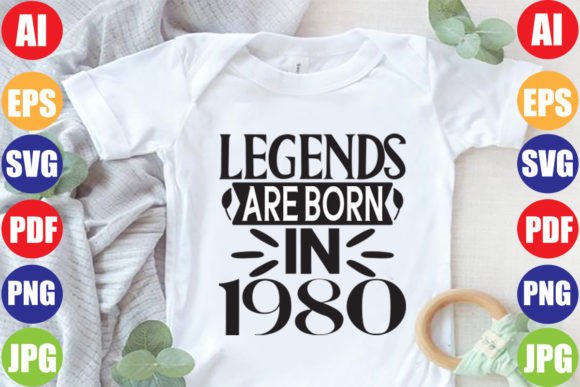
When I opened Legends Are Born in 1991 for the first time, my eye went straight to the clean weight of the numerals—especially that “1991.” It’s not overly ornate, but it carries presence. The typography feels intentional: slightly condensed, with subtle serif influence and confident spacing. There’s no extra flourish, no distracting swirls—just grounded, readable letterforms that suggest legacy, not trend-chasing. That matters. As someone who’s stitched hundreds of designs onto everything from newborn onesies to boutique aprons, I know clarity under needle tension is non-negotiable. This design doesn’t shout—it resonates. And that resonance? It lands strongest on custom apparel and personalized gifts where meaning outweighs flash.
How It Actually Stitches: Real-World Performance Across Projects
I tested Legends Are Born in 1991 on a mid-weight cotton sweatshirt, a linen tote bag, and a baby-soft knit onesie—all common touchpoints for craft businesses and Etsy sellers. On the sweatshirt, it stitched cleanly with standard stabilizer and medium-density fill stitch. No puckering, no thread breaks. The letters held shape without needing excessive satin stitch borders—ideal for small shop owners who value speed *and* polish. On the linen tote, the design read beautifully at 4.5 inches wide: crisp edges, balanced negative space, and enough visual weight to hold up against natural fabric texture. That’s a win for handmade product listings where mockups need to feel authentic, not over-rendered.
For baby embroidery? I scaled it down to 3.2 inches and used lightweight tear-away stabilizer. The result was soft, legible, and gentle—no stiff or bulky areas. Customers notice that. A parent buying a “born in 1991” onesie isn’t just buying fabric—they’re buying sentiment. And Legends Are Born in 1991 delivers that quietly, respectfully. It also works well as an embroidered patch (heat-seal or sew-on) for caps or denim jackets—its clean lines translate across surfaces without distortion.
Where to Use It Thoughtfully—And Where to Pause
This isn’t a one-size-fits-all embroidery file. Its strength lies in intentionality—not versatility at all costs. Avoid cramming it into tiny hoop sizes below 4 inches unless you’ve verified how the smallest serifs and counters hold up in your machine’s stitch engine. On stretchy fabrics like jersey tees, use cut-away stabilizer underneath *and* topping for clean letter definition—especially around the crossbars of the “9” and “1.” Dark fabrics demand high-contrast thread colors; test black-on-charcoal or navy-on-black in a printable mockup first. And while it reads well on flat surfaces, skip curved applications like baseball caps unless you’re using a cap frame and have confirmed stitch density won’t cause shadowing or skipped stitches in the crown curve.
Also worth noting: this design leans into its year-based theme. That makes it powerful for milestone gifts—25th birthday tees, reunion merch, or retirement keepsakes—but less flexible for evergreen branding. If you're building a cohesive line of digital embroidery files for your craft business, pair Legends Are Born in 1991 with simpler monograms or minimalist icons to balance your catalog.
What It Adds to Your Finished Product—Beyond the Thread
Stitching Legends Are Born in 1991 doesn’t just add text—it adds narrative weight. On a kitchen towel for a 1991-born chef? It becomes a quiet signature. On a holiday gift pillow cover? It transforms decor into heirloom energy. That kind of emotional resonance lifts perceived value—and customers pay more for pieces that feel considered, not generic. For Etsy sellers, that means better conversion from thumbnail to cart. For boutique owners, it supports brand consistency when paired with complementary design assets like coordinating cards or tags.
It also builds trust. When a buyer sees crisp, evenly spaced stitching—no fuzzy edges, no inconsistent line weights—they subconsciously register craftsmanship. That’s especially true for personalized gifts. A rushed or muddy execution of Legends Are Born in 1991 would undermine the very idea of “legend.” So treat it like what it is: a statement piece that deserves thoughtful execution.
Practical Notes Every Embroidery Designer Should Check
- Test first on scrap fabric matching your final project’s weight and stretch.
- Review stitch density—if your machine flags heavy fill areas, consider simplifying inner curves or adjusting underlay.
- Confirm hoop size compatibility before digitizing or purchasing—this design shines at 4–5 inches but may lose impact if stretched too large.
- Inspect small details in your embroidery software: check serif integrity, spacing between “Legends” and “Are Born,” and whether the “1991” kerning holds under stitch simulation.
- Try black-and-white mockups to gauge contrast on light vs. dark backgrounds—some thread brands mute on charcoal or heather gray.
- Use proper stabilizer: cut-away for knits, tear-away for stable wovens, and topping for textured fabrics like terry cloth or burlap.
- Verify licensing before selling finished items or bundling Legends Are Born in 1991 into digital embroidery file packs—commercial use rights aren’t automatic.
Final Thought: Not Just Another T-Shirt Design
Legends Are Born in 1991 stands apart because it refuses to be disposable. It’s not chasing virality—it’s honoring specificity. As a designer who evaluates hundreds of graphics each year, I can say this: it’s rare to find a machine embroidery design that balances nostalgia, readability, and quiet confidence so consistently. Whether you’re stitching it onto a custom embroidered tote bag for a local coffee shop or packaging it as part of a curated holiday embroidery kit, it carries intention. And in today’s handmade market—where buyers choose authenticity over algorithm—it’s that intention that turns a simple phrase into something people want to wear, display, and pass on.