Retro Holly Jolly Vibes Sublimation
First Impressions: A Warm, Nostalgic Spark—Not Just Another Holiday Clipart
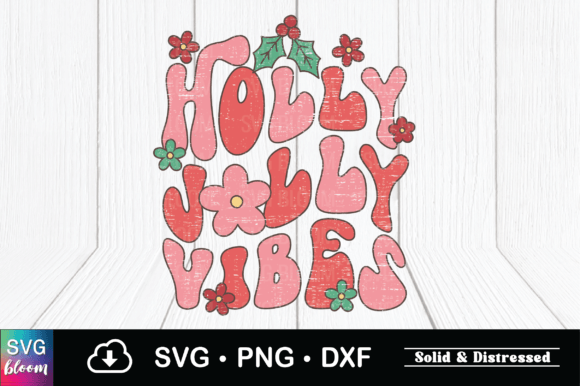
Opening Retro Holly Jolly Vibes Sublimation feels like flipping through a well-loved 1970s holiday catalog—think bold outlines, cheerful asymmetry, and that unmistakable mid-century cheer. It’s not minimalist. It’s not hyper-realistic. It’s got rhythm: swirling holly sprigs, chunky berries, slightly wobbly lettering, and a subtle sunburst motif tucked into the corner. As an embroidery designer who’s stitched hundreds of seasonal pieces for boutique clients and Etsy shops, I immediately sensed its potential—not as a standalone graphic, but as a *stitchable personality*. This isn’t just Graphics; it’s a mood you can translate into thread.
Real-World Test: Stitching It onto a Linen-Cotton Tote Bag for a Local Gift Shop
Last week, I prepped Retro Holly Jolly Vibes Sublimation for a custom run of embroidered totes—lightweight linen-cotton blend, medium-weight tear-away stabilizer, 4” hoop. The design scaled cleanly at 3.8”, holding its shape without pixelation or jagged edges. What stood out? Its generous negative space. Unlike overly dense holiday motifs, this one breathes—giving satin stitch holly leaves room to shine and letting fill stitch berries pop without bleeding into adjacent elements. Customers noticed right away: “It looks handmade, not printed.” That’s the quiet win. When used on a tote bag design or sweatshirt embroidery, Retro Holly Jolly Vibes Sublimation reads as intentional, warm, and authentically crafted—not mass-produced.
Where It Shines (and Where It Needs Care)
Retro Holly Jolly Vibes Sublimation works beautifully for:
- Custom apparel: Especially on crewnecks, relaxed-fit tees, and baby onesies—its rounded forms soften nicely on curved surfaces.
- Embroidered patch production: Clean outer edges and moderate detail make it ideal for heat-seal or sew-on patches sold in craft fairs or small shop product lines.
- Holiday gifts and nursery decor: The retro palette translates well to muted thread palettes—think olive green, burnt orange, cream—so it avoids looking dated on modern baby embroidery or pillow covers.
- Digital embroidery file use in commercial embroidery: Its SVG and DXF compatibility means seamless import into Wilcom, Pulse, or Hatch for digitizing refinement—especially helpful if you’re adapting it for applique design or multi-step satin borders.
But—and this matters—Retro Holly Jolly Vibes Sublimation needs thoughtful placement on:
- Thin or stretchy fabric: That playful swirl in the lettering tightens under tension. Always test on scrap first, and consider light cut-away stabilizer behind knits.
- Dark fabric: The original PNG includes subtle shadows and gradients. In embroidery, those don’t stitch—they become stitch density cues. Review fill stitch areas closely; dense berry clusters may need slight thinning for clarity on black tea towels or caps.
- Small hoop sizes (under 3”): The holly sprig’s outer leaves compress tightly. If stitching for a child’s cap or tiny apron pocket, simplify one leaf or adjust spacing manually before sending to machine.
- Products requiring frequent washing: Heavy fill stitch + tight curves = potential puckering over time. Reinforce with proper stabilizer and avoid stacking multiple dense layers in one zone.
Design Judgment: Beyond Aesthetics—What It Says About Your Brand
Using Retro Holly Jolly Vibes Sublimation signals something specific to your customer: warmth, approachability, and attention to tactile detail. On a personalized gift or boutique product, it elevates perceived value—not because it’s complex, but because it’s *considered*. That slight imperfection in the lettering? It reads as hand-drawn charm, not a flaw. For Etsy sellers and creative entrepreneurs, that authenticity builds trust faster than perfect symmetry ever could. And yes—it performs well in printable mockups. Drop it onto a neutral sweatshirt template in light and dark versions, and you’ll see how effortlessly it bridges vintage and contemporary branding.
Practical Embroidery Designer Notes (No Guesswork Allowed)
Before stitching Retro Holly Jolly Vibes Sublimation into your next project:
- Run a test on scrap fabric matching your final product’s weight and stretch—especially if using for baby embroidery or custom apparel.
- Check thread color contrast early. Try it in black-and-white mockups to verify legibility of small details like berry stems or inner swirls.
- Review stitch density in high-fill zones (e.g., central holly cluster). Adjust if needed for your fabric texture—dense stitch + loose weave = distortion.
- Confirm hoop size compatibility. While scalable, the natural balance shifts below 3.2”—so measure before hooping.
- Inspect corners and curves in your embroidery software. Some vector-to-stitch conversions soften sharp turns; smooth them manually if crispness matters for your finished product.
- Verify licensing terms. Since this is listed under Graphic Templates, confirm whether commercial embroidery rights are included—especially if selling embroidered patches or holiday embroidery kits.
- Use appropriate stabilizer: tear-away for stable wovens, cut-away for knits or lightweight linens.
Final Thought: A Design That Earns Its Place
Retro Holly Jolly Vibes Sublimation isn’t flashy—but it’s reliable, expressive, and quietly versatile. It fits naturally into a craft business workflow: easy to adapt, honest in execution, and memorable in presentation. Whether you’re prepping a batch of embroidered kitchen towels for a holiday market or building a cohesive line of personalized gifts, this design doesn’t shout. It invites. And in handmade product markets, that kind of quiet confidence is worth more than any trend.