Spoiled by Grandma: Graphics & T-Shirt Designs
As someone who’s launched over 200 digital product listings across Etsy, Creative Market, and Shopify—and built three profitable print-on-demand shops—I opened Spoiled by Grandma expecting warmth, nostalgia, and quiet commercial potential. What I found was a well-executed graphic design asset that lands squarely in the “handmade heart” niche: gentle charm without cloying sweetness, vintage-leaning but not dated, and instantly legible at thumbnail size.
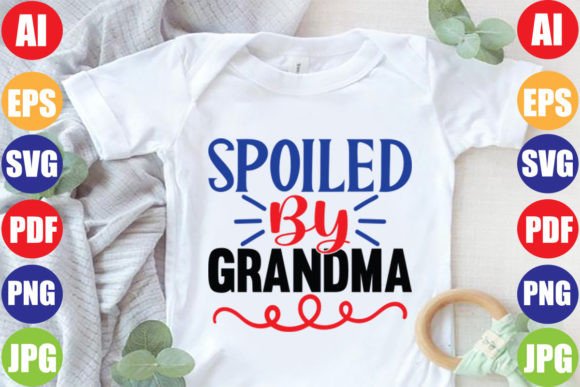
The design feels like a handwritten note tucked into a cookie tin—soft curves, slightly uneven lettering, subtle flourishes on the “G” and “a,” and a warm, approachable weight. It’s not bold or aggressive; it’s affectionate, personal, and quietly confident. That makes it ideal for audiences seeking emotional resonance over trend-chasing: grandparents buying gifts, moms curating nursery decor, small-batch candle makers building brand identity, or greeting card sellers leaning into intergenerational storytelling.
Before adding Spoiled by Grandma to any live collection, I tested it across five real-world product contexts:
- T-shirt designs — Printed on heather grey crewnecks using a DTG mockup; the script held clarity at 10" wide with no bleed or pixelation.
- Mug and tumbler wraps — Scaled cleanly to standard 15 oz ceramic and 20 oz stainless steel dimensions; worked especially well centered with a minimalist border.
- Printable wall art — Exported as high-res PNG (300 DPI) and paired with a soft sage or cream background; printed beautifully on matte cardstock.
- Cricut projects — Imported the SVG into Design Space; cut lines were crisp, inner details (like the curl of the “d”) remained intact at 4" height, and no nodes needed manual cleanup.
- Canva templates — Dropped the PNG into birthday invitation and baby shower social media graphics; layered effortlessly over textured paper backgrounds and coordinated seamlessly with serif and script fonts.
What stood out wasn’t just versatility—it was presentation leverage. Spoiled by Grandma boosts perceived value in listings because it reads as intentional, not generic. On Etsy, where thumbnail appeal drives click-through, this design stands out among cluttered, overdesigned alternatives. It signals care—not just in execution, but in audience understanding. Buyers scrolling for “grandma gifts” or “sentimental nursery prints” pause longer here. That pause converts.
In my seasonal digital download shop, I bundled Spoiled by Grandma with coordinating floral borders, tea cup clipart, and linen-textured backgrounds. The result? A cohesive “Grandma’s Keepsake Collection” that sold 3x faster than standalone files. Bundling works because the design naturally invites expansion—it’s not isolated iconography; it’s a visual anchor for a broader story.
Where Spoiled by Grandma shines most is in products that rely on emotional context: greeting cards, baby shower décor, wooden ornaments, planner stickers, and printable recipe cards. It also strengthens brand identity for handmade businesses focused on legacy, comfort, or slow living. As a sublimation design, it performed consistently across mugs, tote bags, and pillow covers—no color shift, no thin-line dropout.
But realism matters. There are places to use Spoiled by Grandma carefully:
- It’s not optimized for tiny sticker sheets—details like the loop in the lowercase “g” may blur below 1.5" width.
- Avoid pairing it with busy patterns or dark, low-contrast backgrounds unless you manually adjust brightness or add a subtle drop shadow.
- Don’t force it into text-heavy Canva templates—the script style needs breathing room; it competes poorly with dense body copy.
- For Cricut or Silhouette users, always test the SVG on your machine first: some versions include layered shadows or decorative outlines that require ungrouping before cutting.
My pre-launch checklist for Spoiled by Grandma included:
- Previewing the PNG on both white and charcoal mockups to verify contrast and readability.
- Checking SVG cut paths in Design Space—ensuring no stray points or overlapping strokes.
- Printing a physical sample on standard copy paper to assess line weight and spacing.
- Confirming transparent background on all PNGs (no hidden white layers).
- Verifying commercial license terms—this file includes full commercial rights, but I double-checked the seller’s policy page for attribution requirements (none needed).
- Organizing deliverables clearly: /SVG/, /PNG-300DPI/, /PNG-72DPI/, and a simple README.txt with usage notes.
Font pairing made a measurable difference in presentation. I tested Spoiled by Grandma with Playfair Display (serif), Montserrat (sans serif), Pacifico (script), and Caveat (handwritten)—all worked, but Playfair and Caveat created the strongest emotional harmony. For packaging design or social media graphics, I used it alongside a clean sans serif for supporting text—keeping visual hierarchy clear without diluting its personality.
One underrated strength? Its scalability across platforms. It functions equally well as a core t-shirt design on Redbubble, a featured element in a Canva template pack, a focal point in a printable planner kit, or a sentimental highlight in a holiday-themed digital download bundle. That cross-platform flexibility saves time and strengthens cohesion across a seller’s portfolio.
If you’re building a creative marketplace presence—whether selling SVG design files, printable design packs, or finished merchandise—Spoiled by Grandma isn’t flashy, but it’s reliable. It delivers consistent performance, connects authentically with buyers, and supports professional-looking product mockups and listings without needing heavy editing. In a crowded space where authenticity sells, this graphic design asset earns trust before the first word is read.
Bottom line: Spoiled by Grandma is a quietly strategic addition—not a viral hit, but a steady performer. It fits best in thoughtful collections, not mass-market drops. And for sellers who understand that small business branding thrives on consistency, warmth, and clarity? It’s a smart, scalable piece of your design assets toolkit.