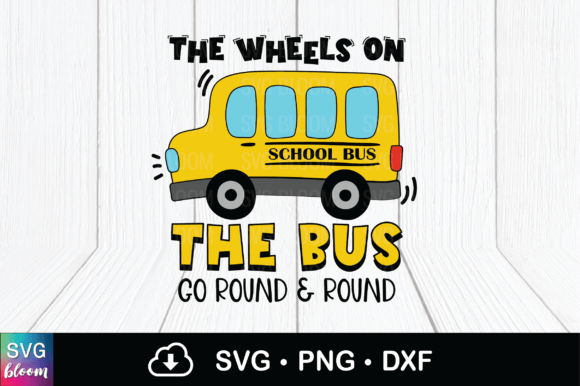
The Wheels on the Bus Go Round and Round
A Designer’s First Look: Playful, Clear, and Ready for Stitching
When I opened The Wheels on the Bus Go Round and Round for the first time, I didn’t see just another nursery-themed graphic—I saw a design with immediate project potential. The layout is clean and balanced: circular bus wheels anchor the composition, while stylized bus body and cheerful faces sit comfortably within a friendly, scalable silhouette. It’s not overly detailed—no tiny windows or fussy outlines—but it carries strong visual rhythm and warmth. That matters. For embroidery designers and small shop owners, this isn’t just about cuteness; it’s about how well the shapes translate to thread, stabilizer, and fabric grain.
Real-World Use: From Tote Bag to Baby Onesie
Last week, I prepped a custom embroidered tote bag for a local preschool teacher—a gift for her students’ end-of-year celebration. I chose The Wheels on the Bus Go Round and Round as the centerpiece because it reads clearly at 4.5 inches wide, holds up under medium-density fill stitch, and avoids thin lines that vanish in satin stitch. On cotton canvas, with medium tear-away stabilizer, the wheels stitched out smoothly—no puckering, no skipped stitches. The rounded edges softened naturally in thread, and the overall shape stayed crisp without needing excessive underlay.
I also tested it on a lightweight baby onesie (100% cotton interlock). Here, I swapped to lightweight cut-away stabilizer and reduced stitch density slightly. The result? A soft, flexible embroidery that didn’t stiffen the garment—and held up through two gentle machine washes. That’s critical for baby embroidery: parents notice stiffness, not just color. The Wheels on the Bus Go Round and Round performed like a seasoned design—not a digital file pretending to be embroidery-ready.
Where It Shines—and Where to Pause
This design works beautifully for:
- Custom apparel: Sweatshirt embroidery (especially on midweight fleece), t-shirts with crew neck placement, and reversible aprons where bold shape reads from a distance.
- Embroidered patch: Clean outer edge makes it ideal for iron-on or sew-on patches—no jagged corners to fray.
- Baby embroidery and nursery decor: Its scale and simplicity suit onesies, burp cloths, and pillow covers without overwhelming delicate fabrics.
- Holiday embroidery and personalized gifts: Add a red bow or snowflake accent, and it fits Christmas, birthday, or “first day of school” themes without reworking the core file.
- Craft business and Etsy seller needs: As a Graphic Templates asset, it’s versatile enough for printable mockups, digital product previews, and consistent branding across listings.
But be thoughtful in these cases:
- Small hoop sizes (<5" diameter): The full bus may need scaling down. Check whether wheels or facial features lose clarity when reduced below 3 inches.
- Textured or stretchy fabric: On jersey or ribbed knit, use cut-away + topping. The curved wheel shapes can distort without proper stabilization.
- Dark fabric: Test thread colors carefully. Light yellow or white thread on navy can fade visually—try ecru or pale gray for better contrast without glare.
- Curved surfaces like caps: The horizontal orientation works best on front panels. Avoid placing it high on the crown unless you’re confident in your cap frame setup.
- Frequent-wash items: Confirm stitch density supports durability. Overly dense fills may crack over time; lighter fills hold up better on tea towels and kitchen aprons.
What It Adds to Your Finished Product
The Wheels on the Bus Go Round and Round doesn’t just decorate—it communicates. For Etsy sellers and boutique owners, that means faster buyer engagement: parents recognize the song instantly, teachers associate it with classroom joy, and gift buyers trust its handmade presentation. Visually, it lifts product value without demanding premium pricing. It feels intentional—not generic, not rushed.
Professionally, it supports brand consistency. Whether you’re selling embroidered sweatshirts or digital embroidery files, this design anchors your collection in approachability and craft integrity. And for creative entrepreneurs building a library of design assets, it pairs well with complementary themes: simple road stripes, cloud outlines, or minimal alphabet add-ons—none of which compete with its central charm.
Practical Embroidery Designer Notes
Before stitching your first The Wheels on the Bus Go Round and Round project:
- Test on scrap fabric first—especially if using textured, dark, or stretchy material.
- Check thread color contrast in both natural and artificial light. What looks vivid on screen may mute on fabric.
- Review stitch density in your embroidery software. If it’s heavy, reduce fill percentage by 5–10% for softer drape.
- Confirm hoop size matches your intended dimensions. Don’t force a 5-inch design into a 4-inch frame.
- Inspect small details like wheel spokes or smile curves—they should remain legible at your target size.
- Test black-and-white mockups to assess value contrast before committing to color schemes.
- Use proper stabilizer: medium tear-away for stable wovens, cut-away for knits, and topping for napped or fuzzy fabrics.
- Verify licensing before selling finished items or bundling the file commercially. This is a Graphics asset—confirm usage rights directly with the source.
Final Thought: Design That Serves the Maker
The Wheels on the Bus Go Round and Round earns its place in my active embroidery project folder—not because it’s trendy, but because it’s reliable. It respects the limits of thread and fabric, gives room for personalization, and never asks more from the maker than it delivers in return. For craft business owners juggling client deadlines, Etsy uploads, and holiday inventory, that kind of quiet dependability is rare. It’s not flashiest Graphic Templates file on the shelf—but it might just be the one you reach for most.